Video
LLM 시대의 논문작성법 (2024년 3월)
YouTube에서 보기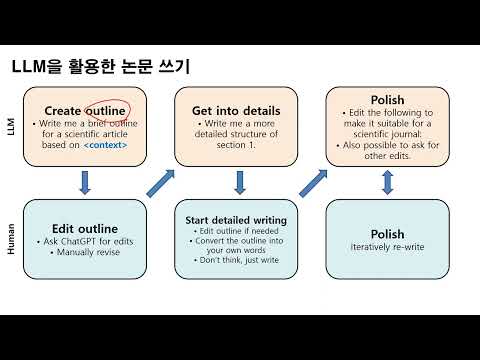
교육 및 공중보건 · Education & Public Health
요약
이 영상은 대규모 언어 모델을 학술 연구와 논문 작성의 여러 단계에 활용하는 사례 기반 작업 흐름을 설명한다. 문헌 검색과 정리, 논문 읽기와 메모, 연구 설계, 데이터 분석, 원고 작성과 편집, 사전 심사, 제출 자료 준비, 교육적 활용, 윤리와 보안을 주요 주제로 다룬다.
핵심 내용
- Consensus, ScholarAI, SciSpace와 같은 맞춤형 GPT, Perplexity AI, Elicit 등을 이용해 문헌을 검색하고 여러 논문을 요약하거나 구조화된 표로 정리할 수 있다고 설명한다.
- 제시된 자동 검색 파이프라인은 연구 주제에서 구조화된 연구 질문과 PubMed 검색식을 생성하고, Entrez API로 서지정보와 초록을 수집한 뒤, Claude API로 관련성을 1에서 5까지 평가하고 요약하여 참고문헌 관리 도구로 가져오는 방식이다.
- PDF 대화형 도구를 사용해 연구의 새로움, 핵심 결과, 색인어, 방법 선택의 근거를 추출하고, 독자의 이해를 점검하는 질문을 생성할 수 있다고 설명한다. Obsidian을 이용한 Zettelkasten 방식의 구조화된 메모도 제안한다.
- 권장 독자
- 학술 연구자, 의과대학 교수진, 대학원생, 과학 저자
- 범위와 한계
- 이 요약은 2024년 3월 21일 영상에 제공된 설명만을 바탕으로 한다. 영상에서 제시한 도구와 작업 흐름의 실제 정확도, 재현성, 최신 정책 변화, 비용, 개인정보 보호 수준 및 특정 연구 환경에서의 성능은 독립적으로 검증되지 않았다. 또한 LLM이 생성한 문헌 정보, 분석 코드, 통계 결과, 문장과 해석은 오류가 있을 수 있으므로 원자료와 출처를 사람이 확인해야 한다.
- 연구 맥락
- 이 자료는 연구자와 학습자가 생성형 AI를 연구 및 글쓰기 교육에 활용할 때 필요한 단계적 지원, 사용자 역량, 연구윤리, 저자 책임, 데이터 보안을 다룬다는 점에서 교육 및 공중보건 분야의 디지털 연구 역량과 연결되는 주제를 제공한다.
Summary
The video presents case-based workflows for using large language models across academic research and manuscript production. It covers literature retrieval and organization, paper reading and note-taking, study planning, data analysis, drafting and editing, pre-review, submission materials, educational use, ethics, and security.
Key points
- It describes using custom GPTs such as Consensus, ScholarAI, and SciSpace, as well as Perplexity AI and Elicit, to search the literature, synthesize multiple papers, and organize findings in structured tables.
- The presented automated retrieval pipeline converts a topic into structured research questions and PubMed search strings, uses the Entrez API to collect bibliographic data and abstracts, applies a Claude API relevance score from 1 to 5 with brief summaries, and transfers ranked papers and notes to reference-management tools.
- Interactive PDF tools can be prompted to extract novelty, key findings, indexing terms, and rationales for methodological choices, or to generate comprehension questions for self-assessment. The video also proposes structured note-taking with the Zettelkasten method in Obsidian.
- Audience
- Academic researchers, medical faculty, graduate students, and scientific authors
- Scope and limitations
- This summary is limited to the supplied description of the video dated March 21, 2024. The accuracy, reproducibility, current policy status, cost, privacy protection, and performance of the listed tools and workflows in specific research settings were not independently verified. LLM-generated references, code, statistical outputs, wording, and interpretations may contain errors and require human checking against source data and publications.
- Research context
- The material is thematically connected to education and public health through its focus on staged support for researchers and learners using generative AI, digital research literacy, research ethics, author accountability, and data security.