Video
ChatGPT 의대수업 활용법 (2024년 3월)
YouTube에서 보기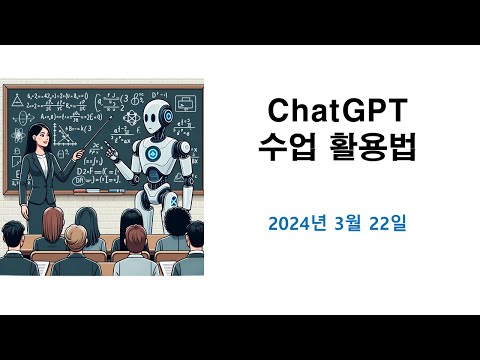
교육 및 공중보건 · Education & Public Health
요약
이 영상은 대학 및 의학교육에서 ChatGPT, Claude, Gemini, Copilot과 같은 대규모 언어 모델과 대화형 인공지능을 강의 운영, 교육과정 설계, 평가, 행정에 활용하는 실무 전략을 설명한다. 프롬프트는 지시, 맥락, 지침으로 구성하며, 영어로 반복적으로 요청한 뒤 전문적이고 기술적인 한국어로 번역하도록 하는 방법이 제시된다.
핵심 내용
- 강의계획서와 강의 개요를 학습자, 수업 기간, 필수 주제, 시간 배분, 선수 지식 및 참고 문서와 함께 생성할 수 있다.
- 간 모델과 병렬관 모델의 비교, 양성자펌프억제제의 약동학적 과정에 대한 단계별 설명, 효소 억제의 비유와 임상 사례 등 복잡한 개념의 설명을 지원할 수 있다.
- 예상 학생 질문, 흥미로운 사실, 실시간 참거짓 문항, 객관식 문항과 해설을 생성할 수 있다. 다만 교수자는 인공지능이 만든 문항을 검토하고 수정해야 한다는 전제가 제시된다 med.
- 권장 독자
- 대학 교수, 의학교육자, 교수설계자, 교육행정가 및 의학교육에 인공지능을 도입하려는 연구자와 고급 학습자를 위한 내용이다.
- 범위와 한계
- 전통적인 주제 요약형 에세이는 대규모 언어 모델이 쉽게 작성할 수 있으므로 교육적 가치가 제한될 수 있다고 설명한다. 대안으로 인공지능 출력의 비판적 평가, 학습자 주도의 탐구, 인공지능을 활용한 발표 준비와 대면 토론을 결합한 플립드 러닝이 제안된다. 또한 구조화된 채점 기준에 따른 서술형 답안의 예비 채점, 시험 문항의 분류, 학생 강의평가의 요약도 활용 사례로 제시된다. 인공지능은 환각과 실행 결과의 변동성을 보일 수 있으며, 인공지능 탐지 도구의 오류로 학생을 잘못 의심할 위험이 있다. 한국어 직접 입력은 영어 입력보다 느리거나 기술적 표현이 부정확할 수 있다고 설명한다. 제공된 자료는 실증적 비교 연구나 학습 성과의 정량적 결과를 보고하지 않는 증거 노트이며, 서비스 기능과 가격 정보는 변동될 수 있다.
- 연구 맥락
- 이 내용은 의학교육에서 생성형 인공지능, 데이터 기반 교육 운영, 평가 설계의 접점을 다루는 주제로서 Sangzin Ahn의 의료교육 및 교육기술 관련 공개 콘텐츠와 연결된다.
Summary
This video describes practical strategies for using large language models and conversational AI tools such as ChatGPT, Claude, Gemini, and Copilot in university and medical education, including course administration, curriculum design, assessment, and educational reporting. It presents prompts as combinations of instruction, context, and guidelines, and recommends iterative prompting in English followed by translation into professional and technical Korean.
Key points
- Syllabi and lecture outlines can be generated by specifying the learners, course duration, required topics, time allocation, prerequisite knowledge, and reference documents.
- AI tools can support explanations of complex concepts, including comparisons of hepatic clearance models, stepwise descriptions of proton pump inhibitor pharmacokinetics, and analogies paired with clinical examples.
- The video describes generating anticipated student questions, engaging facts, rapid true or false questions, multiple choice questions, and rationales. Instructor review and modification of AI drafted assessment items remain necessary.
- Audience
- The intended audience includes university professors, medical educators, instructional designers, educational administrators, researchers, and advanced learners interested in AI integration in medical education.
- Scope and limitations
- The source argues that conventional essays asking students simply to describe or summarize a topic may have limited educational value because large language models can produce them readily. It proposes critical evaluation of AI outputs, inquiry driven investigation, and flipped classroom activities combining AI assisted preparation with face to face discussion. Other applications include provisional grading of short answer responses using structured rubrics, automatic classification of examination questions, and synthesis of qualitative course evaluations. The stated risks include hallucinations, run to run output variability, and false accusations arising from errors in AI detection software. Direct prompting in Korean is described as potentially slower and less precise than prompting in English. The supplied material is an evidence note rather than a reported empirical comparative study and provides no quantitative educational outcomes. Tool features and pricing may also change over time.
- Research context
- The topic has a neutral thematic connection to Sangzin Ahn's publicly presented interests in medical education, generative AI, and data informed educational practice.