Video
NotebookLM 다국어 지원, 활용법 (2025.4)
YouTube에서 보기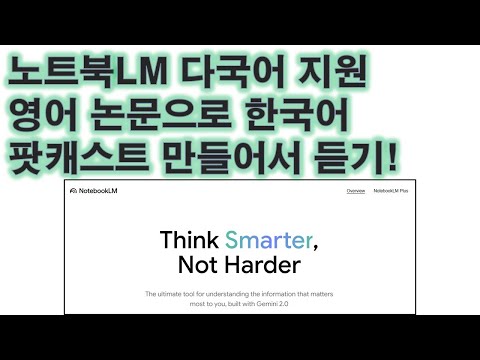
교육 및 공중보건 · Education & Public Health
요약
이 영상은 Google NotebookLM의 다국어 Audio Overview, 대화형 Mind Map, Discover Sources 기능을 학술 연구와 학습에 활용하는 방법을 시연한다. 시연에서는 영어 학술 PDF를 바탕으로 한국어 두 진행자 형식의 오디오 개요를 생성하고, 문서의 핵심 개념을 계층형 지도로 정리하며, 관련 문헌을 검색해 노트북에 가져오는 과정을 설명한다.
핵심 내용
- NotebookLM은 두 진행자 형식의 Audio Overview를 50개 이상의 언어로 지원하며, Settings, Output Language, 한국어 선택, Generate 순서로 생성할 수 있다. 재생 속도는 최대 2.0배까지 조절할 수 있고 MP3 파일로 다운로드할 수 있다.
- 영상은 이중 부호화 이론을 바탕으로 청각과 시각 또는 텍스트 정보를 함께 활용하면 이해와 기억을 보강할 수 있다고 설명한다. 또한 텍스트를 훑어보는 방식은 학습자가 내용을 습득했다고 오인하게 할 수 있으며, 대화형 오디오는 순차적 주의를 요구한다고 논의한다.
- 시연에 사용된 문서는 Automation's Ironies in Medical Education for the AI Era이며, Bainbridge의 1983년 Ironies of Automation 논의와 연결된다. 영상에서 제시된 교육 전략은 오프로딩과 숙련 저하 방지, AI를 사용하지 않는 학습 단계 설정, 가설 연역적 추론 강화, AI 저항형 과제와 AI 통합형 과제의 설계이다. 이러한 내용은 자동화가 단순 업무를 처리하고 인간에게 복잡한 예외 상황을 남길 수 있다는 문제와 관련된다.
- 권장 독자
- 학술 연구자, 의학교육자, 학생, 그리고 복잡한 연구 문헌을 다중양식 AI 도구로 처리하고 검토하려는 전문가를 위한 내용이다.
- 범위와 한계
- 이 내용은 단일 영상의 기능 시연과 설명을 요약한 것이다. 한국어 오디오 개요는 하나의 학술 PDF를 대상으로 약 7분 11초가 걸렸으며, 처리 시간은 상황에 따라 달라질 수 있다. 자동 생성된 오디오와 텍스트 요약의 정확성 및 완전성을 독립적으로 검증한 결과는 제시되지 않았고, 텍스트 요약에는 불필요하거나 장황한 내용이 포함될 수 있으므로 주의 깊은 확인과 프롬프트 조정이 필요하다.
- 연구 맥락
- 이 주제는 의학교육에서 다중양식 AI, 문헌 탐색, 정보 요약, 과제 재설계를 활용하는 교육 및 공중보건 연구와 주제적으로 연결된다.
Summary
This video demonstrates how to use Google NotebookLM's multilingual Audio Overview, interactive Mind Map, and Discover Sources features for academic research and study workflows. The demonstration generates a Korean two-host audio overview from an English academic PDF, organizes the document's main concepts as a hierarchical map, and searches for related literature that can be imported into the notebook.
Key points
- NotebookLM supports its two-host Audio Overview in more than 50 languages. The demonstrated workflow is Settings, Output Language, Korean selection, and Generate. Playback speed can be adjusted up to 2.0 times, and the audio can be downloaded as an MP3 file.
- The video discusses Dual-Coding Theory as a rationale for combining auditory and visual or textual information to support comprehension and memory. It also notes that skimming text may create an illusion of competence, whereas conversational audio requires sequential attention.
- The demonstration uses a document titled Automation's Ironies in Medical Education for the AI Era and relates it to Bainbridge's 1983 discussion of Ironies of Automation. The educational strategies presented include preventing offloading and deskilling, establishing AI-free learning phases, reinforcing Hypothetico-Deductive Reasoning, and designing both AI-resistant and AI-integrated assignments. These points concern the possibility that automation handles simple tasks while leaving humans with complex edge cases.
- Audience
- The material is intended for academic researchers, medical educators, students, and professionals seeking to process and review complex research literature with multimodal AI tools.
- Scope and limitations
- This summary is based on a single video presenting tool demonstrations and explanations. Korean Audio Overview generation took approximately 7 minutes and 11 seconds for one academic PDF, but processing time may vary. The source does not provide independent validation of the generated audio or text summaries, and automated text summaries may contain ancillary or verbose material, requiring careful review and prompt refinement.
- Research context
- This topic has a thematic connection to education and public health research involving multimodal AI, literature discovery, information summarization, and assignment redesign in medical education.