Video
연구 설계부터 논문 작성까지 자동화하는 인공지능 AI Scientist (2024.8)
YouTube에서 보기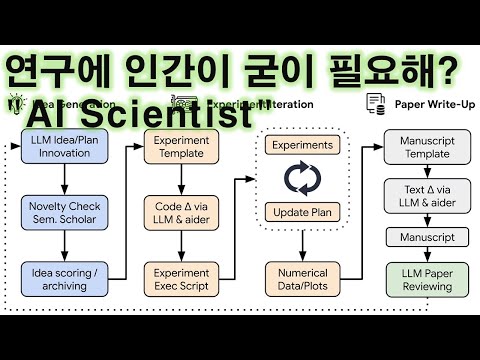
요약
이 영상은 2024년 8월 공개된 논문 The AI Scientist: Towards Fully Automated Open-Ended Scientific Discovery를 바탕으로, 대규모 언어 모델을 이용해 연구 아이디어 생성, 코드 작성과 실험, LaTeX 논문 작성, 자동 동료평가를 연결하는 종단간 시스템을 설명한다. 시스템은 문헌 검색과 아이디어 평가, 반복적 코드 실행 및 오류 수정, 실험 기록과 시각화, 인용과 원고 생성, 학회 기준에 따른 자동평가를 수행하도록 설계되었다.
핵심 내용
- 아이디어 생성 단계에서는 역할 기반 프롬프트, 사고 연쇄, 자기 성찰, Semantic Scholar API와 웹 검색을 사용해 문헌 중복을 점검하고, 흥미성, 실행 가능성, 신규성 등의 기준으로 제안을 평가한다.
- 실험 단계에서는 기존 코드 템플릿과 LLM 코딩 보조 프레임워크를 이용해 Python 코드를 작성하고 수정한다. 시스템은 실행 오류, 중단, 시간 초과를 감지하고 제한된 횟수 안에서 자동 수정을 시도하며, 실험 노트와 결과 시각화를 남긴다.
- 논문 작성 단계에서는 학회 템플릿에 맞춘 LaTeX 원고를 생성하고, 제목부터 한계점까지의 절을 순차적으로 작성하며, 문헌 검색과 BibTeX 인용, 표, 수식, 그림을 포함한 PDF를 만든다. 자동평가 단계에서는 GPT-4o 기반 검토 에이전트가 학회 심사 기준에 따라 점수, 의견, 추천 결정, 확신도를 산출한다。
- 권장 독자
- 인공지능 및 기계학습 연구자, 학술 출판과 동료평가 관계자, 자동화된 논문 심사와 에이전트형 연구 시스템에 관심 있는 기술 연구자.
- 범위와 한계
- 제공된 내용은 영상에서 소개된 논문과 그에 관한 증거 메모의 요약이며, 원 논문이나 실험 결과를 독립적으로 검증한 자료가 아니다. 영상과 메모는 주로 기계학습 연구 자동화에 초점을 두며 임상 환경에서의 성능, 의료 데이터 적용, 환자 안전성 또는 임상적 유효성을 평가하지 않는다. 보고된 비용, 모델 비교, 심사자 상관 및 실패 사례는 제공된 메모에 기술된 범위로만 해석해야 한다.
- 연구 맥락
- 이 주제는 대규모 언어 모델, 자동화된 실험 파이프라인, 재현 가능한 데이터과학 워크플로, 안전한 코드 실행과 같은 의료 AI 및 데이터과학의 방법론적 관심사와 연결된다. 다만 제공된 영상의 사례는 의료 연구가 아니라 인공지능 연구 자동화에 관한 것이다.
Summary
This video discusses the August 2024 paper The AI Scientist: Towards Fully Automated Open-Ended Scientific Discovery. It describes an end to end system that uses large language models to connect research idea generation, code development and experimentation, LaTeX paper writing, and automated peer review. The system is designed to search the literature and score ideas, execute and debug code iteratively, record and visualize experiments, generate manuscripts and citations, and evaluate papers against conference review criteria.
Key points
- During idea generation, role based prompting, chain of thought, self reflection, the Semantic Scholar API, and web search are used to check overlap with prior literature and score proposals on criteria such as interestingness, feasibility, and novelty.
- During experimentation, an LLM coding assistant and baseline code templates are used to write and modify Python code. The system detects execution errors, crashes, and timeouts, attempts automated fixes within a preset limit, and records text based laboratory notes and visualizations.
- During paper writing, the system generates a LaTeX manuscript in a conference format, fills sections from the title through limitations, searches for citation targets and BibTeX entries, and compiles tables, equations, figures, and a PDF. A GPT-4o based reviewer agent produces scores, written comments, recommendations, and confidence ratings using conference review criteria.
- Audience
- Artificial intelligence and machine learning researchers, academic publishers and peer reviewers, conference organizers, and researchers interested in automated manuscript screening, agentic workflows, and safe LLM code execution.
- Scope and limitations
- This summary is based on the supplied video evidence notes about the paper and does not independently verify the original paper or its results. The source focuses on machine learning research automation and does not evaluate clinical performance, medical data applications, patient safety, or clinical validity. Reported costs, model comparisons, reviewer correlations, and failure cases should be interpreted only within the scope documented in the supplied notes.
- Research context
- The topic has a neutral methodological connection to medical AI and data science through its focus on large language models, automated experimentation, reproducible computational workflows, and safe code execution. The source example itself concerns automation of artificial intelligence research rather than medical research.