Video
230810 리뷰논문쓰기 브이로그 6일차 - ChatGPT로 원고에 내용 추가하기
YouTube에서 보기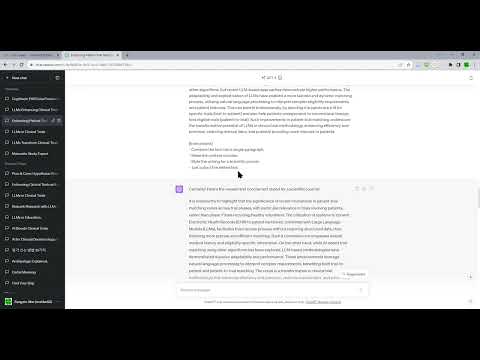
의료 AI 및 데이터과학 · Medical AI & Data Science
요약
이 영상은 임상시험에서 대규모 언어 모델과 인공지능의 활용을 다루는 리뷰 논문을 작성하고 수정하는 6일차 작업을 기록한다. 공동저자가 요청한 내용을 ChatGPT GPT-4를 사용해 기존 원고에 통합하고, 학술적 문체와 문단의 응집성을 유지하려는 편집 과정을 설명한다.
핵심 내용
- 기존 원문과 공동저자가 추가로 요청한 내용을 함께 제시하고, 학술지 문체를 유지하면서 하나의 통합된 문단으로 재구성하도록 ChatGPT에 지시했다.
- 임상시험 환자 매칭과 관련해 대규모 언어 모델로 임상시험 등록자료의 선정 기준과 환자 프로필을 사전 선별하는 방법을 다루었다. 1상 시험에서는 건강한 자원자가 주로 참여하므로 자동 매칭의 중요성이 상대적으로 낮을 수 있지만, 특정 시험을 찾는 환자에게는 중요할 수 있다고 설명했다.
- 전자건강기록을 평가 전에 수작업으로 구조화하지 않고 비구조화된 환자 서사로 변환하는 가능성을 제시했다. 임상시험 자료 코딩에서는 평가자 간 신뢰도 문제와 Berendzen 2020의 관련 논의를 언급했으며, 대규모 언어 모델을 임상 텍스트의 연역적 분석과 가설 생성에 활용하는 방안을 소개했다.
- 권장 독자
- 학술 연구자, 생의학 정보학 연구자, 그리고 과학 논문 작성과 편집에 대규모 언어 모델을 활용하는 저자
- 범위와 한계
- 이 내용은 단일 브이로그에서 제시된 원고 작성 및 ChatGPT 활용 사례와 프롬프트를 요약한 것이다. 임상시험 매칭, 임상자료 분석, 동의서 개선의 효과나 정확성을 검증한 연구 결과를 제시하지 않는다. 공동저자와의 작업은 실시간으로 녹화되지 않았고 ChatGPT 대화 기록으로 공유되었으며, 모델이 새 내용을 별도 문단으로 삽입하는 경향이 있어 추가 지시가 필요했다. 후속 작업으로 대상 학술지 양식에 맞춘 재편집과 참고문헌 인용 정리가 예정되었다.
- 연구 맥락
- 의료 인공지능과 데이터과학에서 대규모 언어 모델을 임상시험 문서 작성, 환자 매칭, 임상 텍스트 분석, 참여자 동의 지원에 적용하는 주제와 연결된다.
Summary
This video records day six of drafting and revising a review paper on the use of large language models and artificial intelligence in clinical trials. It describes using ChatGPT GPT-4 to integrate material requested by a co-author into an existing manuscript while preserving an academic tone and paragraph coherence.
Key points
- The workflow presented the original text together with newly requested co-author content and instructed ChatGPT to blend the material into a cohesive paragraph in a scientific journal style.
- For clinical trial patient matching, the video discussed using large language models to prescreen patient profiles against eligibility criteria in trial registries. Automated matching was described as potentially less important in phase 1 trials, where healthy volunteers are common, but more important for patients seeking specific trial options.
- The video described converting electronic health records into unstructured patient narratives without manual data structuring before evaluation. It also mentioned inter-rater reliability issues in clinical trial data coding, including the discussion associated with Berendzen 2020, and proposed using large language models for deductive analysis and hypothesis generation across clinical texts.
- Audience
- Academic researchers, biomedical informaticians, and authors using large language models for scientific manuscript drafting and editing
- Scope and limitations
- This summary is limited to a single vlog's examples of manuscript drafting and ChatGPT use, including the prompts shown. It does not report validated effects or accuracy for clinical trial matching, clinical data analysis, or consent enhancement. The live exchange with the co-author was not screen recorded and was instead represented through the ChatGPT chat history. The model initially tended to insert new material as a separate paragraph, requiring follow-up instructions for smooth integration. Planned next steps were reformatting for the target journal and finalizing reference citations.
- Research context
- The content is thematically connected to medical artificial intelligence and data science through the application of large language models to clinical trial writing, patient matching, clinical text analysis, and participant consent support.