Video
연구자를 위한 AI Agent 입문 강의 (2026.4)
YouTube에서 보기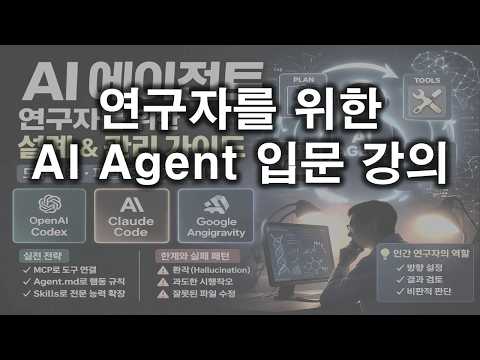
의료 AI 및 데이터과학 · Medical AI & Data Science
요약
이 발표는 학술 연구에서 대규모 언어 모델 기반 AI 에이전트를 활용하는 방법을 소개하고, 전통적 챗봇과 에이전트의 작동 방식, 프로젝트 설정 요소, 연구 workflow, 인간과 AI의 역할 분담을 설명한다. AI 에이전트는 높은 수준의 목표를 바탕으로 계획을 세우고, 코드를 실행하며, 파일과 외부 도구를 사용하고, 실행 결과에 따라 작업을 반복할 수 있다.
핵심 내용
- 전통적 챗봇은 프롬프트와 응답을 순차적으로 주고받으며, 사용자가 데이터 이동, 코드 실행, 문서 해석, 단계별 지시를 직접 수행해야 한다. 반면 AI 에이전트는 여러 단계의 계획, 도구 호출, 파일 조작, 외부 API 사용, 오류 수정, 하위 에이전트 조정을 수행할 수 있다.
- 에이전트의 기본 작동 주기는 목표 설정, 추론과 계획, 도구 실행, 결과 관찰, 종료 또는 재추론의 반복으로 제시된다. 단기 기억은 대화 맥락을, 장기 기억은 프로젝트 파일과 상태 기록 및 중간 요약 문서를 포함한다.
- AGENTS.md는 프로젝트 배경, 디렉터리, 데이터 위치, 분석 절차, 명명 규칙, 형식 및 운영 제한을 기록하는 설정 파일로 설명된다. Skills는 반복 작업을 위한 표준 작업 절차이며, Model Context Protocol은 에이전트와 외부 도구, API, 데이터 자원을 연결하는 인터페이스로 소개된다.
- 권장 독자
- 학술 연구자, 대학원생, 연구실 조사자, 특히 연구에 AI를 도입하려는 초기 경력 연구자
- 범위와 한계
- 이 요약은 제공된 발표 증거 노트만을 바탕으로 한다. 발표에서 언급된 자동화 연구, 자율 실험실, 데이터 통합, 문서 추출 및 병렬 문헌 선별 사례의 원자료와 방법론 전체는 여기에서 독립적으로 검증되지 않았다. 따라서 제시된 성능, 비용 절감, 논문 심사 결과 및 기타 사례 수치는 발표 노트에 보고된 내용으로만 이해해야 한다. 또한 AI 에이전트의 오류, 데이터 누락, 변수와 열 이름 불일치, 오래된 API 사용, 부적절한 통계적 가정, 데이터 누출 및 검증 불가능한 결론의 위험이 명시적으로 지적된다.
- 연구 맥락
- 의료 AI와 데이터과학 연구에서 이 주제는 비표준화된 파일 통합, 연구 자료 목록화, 문서 기반 데이터 추출, 분석 자동화 및 결과 감사와 같은 연구 업무에 AI 에이전트를 적용하는 방법과 연결된다. 발표는 연구 방향, 윤리적 판단, 과학적 검증을 인간이 담당하고, 에이전트는 프로젝트 맥락과 실행을 관리하며, 계산 작업과 물리적 또는 주관적 작업을 구분하는 협업 구조를 제안한다.
Summary
The presentation introduces the use of large language model based AI agents in academic research. It contrasts agents with traditional chatbots and describes agent configuration, research workflows, and the division of responsibilities between humans and AI. An AI agent can use a high level goal to plan multiple steps, execute code, work with files and external tools, and repeat tasks in response to execution results.
Key points
- A traditional chatbot proceeds through prompt and response exchanges, leaving the user to move data, run code, interpret documents, and direct each step. An AI agent can plan multistep work, call tools, manipulate files, use external APIs, correct errors, and coordinate subagents.
- The basic agent loop is presented as goal setting, reasoning and planning, tool execution, observation of results, and either completion or another reasoning cycle. Short term memory consists of conversation context, whereas long term memory includes project files, state logs, and intermediate summary documents.
- AGENTS.md is described as a project configuration file containing background, directories, data locations, analysis procedures, naming rules, formatting requirements, and operational constraints. Skills are reusable standard operating procedures for repeated tasks, and the Model Context Protocol is presented as an interface linking agents with external tools, APIs, and data resources.
- Audience
- Academic researchers, graduate students, laboratory investigators, and especially early career researchers integrating AI into research
- Scope and limitations
- This summary is based only on the supplied evidence notes from the presentation. The original sources and full methods underlying the cited examples of automated research, autonomous laboratory work, data integration, document extraction, and parallel literature screening were not independently verified here. The reported performance, cost reduction, peer review outcome, and other case figures should therefore be understood only as statements described in the presentation notes. The notes also identify risks including missing data, field name mismatches, outdated APIs, inappropriate statistical assumptions, data leakage, and unverifiable conclusions.
- Research context
- For medical AI and data science, the topic is thematically connected to applying AI agents to nonstandardized file integration, research data inventory, document based data extraction, analysis automation, and result auditing. The presentation places research direction, ethical judgment, and scientific validation with humans, while assigning agents responsibility for project context and execution and distinguishing computational work from physical or subjective tasks.