Video
Antigravity 바이브 연구 2달간 경험 (2026.1)
YouTube에서 보기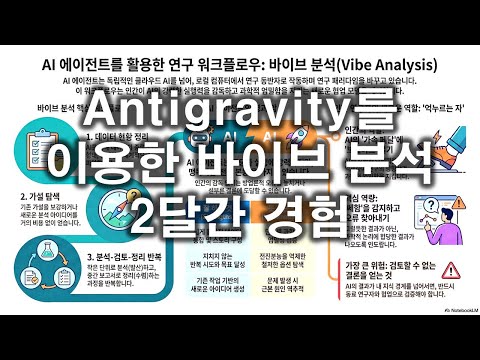
의료 AI 및 데이터과학 · Medical AI & Data Science
요약
이 영상은 2025년 11월 18일부터 2026년 1월 27일까지 Google의 AI 코딩 및 연구 에이전트 Antigravity를 활용해 Vibe Research와 Vibe Analysis를 수행한 경험을 정리한다. 발표자는 12개의 탐색적 프로젝트를 진행하고 그 기간에 4편의 논문을 제출했다고 설명하며, 고수준의 연구 의도와 직관을 전달하고 에이전트가 분석 코드를 작성하도록 하는 작업 방식을 소개한다.
핵심 내용
- 기본 작업 흐름은 데이터 인벤토리 작성, 가설 탐색, 단계별 분석과 검토 및 수렴으로 구성된다. 데이터 구조와 결측 및 분포를 정리한 뒤 에이전트가 가설과 추가 분석을 제안하게 하고, 프로젝트를 여러 연구와 단계로 나누어 탐색 분석을 수행한다.
- 연구자는 중간 산출물을 ChatGPT, Claude, Gemini와 같은 다른 대규모 언어 모델에 전달해 과학적 엄밀성을 점검하고, 통합된 비판을 다시 에이전트에 반영하는 다중 모델 감사 방식을 사용했다.
- 직접 코드를 작성하거나 읽는 일은 크게 줄었고, 오류가 의심될 때 자연어 지시로 재검증을 요청하는 Vibe Debugging이 중심이 되었다. 다만 필요한 경우에는 직접 코드를 검사했다。
- 권장 독자
- LLM과 자율 코딩 또는 연구 에이전트를 데이터 분석과 과학적 연구에 활용하는 연구자, 데이터 과학자, 임상 연구자, 소프트웨어 엔지니어를 위한 내용이다.
- 범위와 한계
- 이 요약은 제공된 영상 및 발표 내용에만 근거한다. 제시된 프로젝트 수, 논문 제출 수, 에이전트의 성능과 실패 사례는 발표자의 경험과 관찰에 따른 것이며, 독립적인 검증이나 통제된 비교 평가의 결과로 제시된 것은 아니다. 영상은 특히 데이터 열 이름과 스키마 혼동, 세션 간 맥락 단절, 오래된 문법과 버전 불일치, 검증되지 않은 결과로 성급히 진행하는 오류를 보고한다. 또한 미세한 방법론적 오류가 후속 분석 전체로 확산될 수 있고, 사용자가 해당 분야의 지식이 부족하면 결과의 검증 가능한 경계를 판단하기 어렵다는 한계를 강조한다.
- 연구 맥락
- 이 주제는 Sangzin Ahn의 포트폴리오와 연결되는 의료 AI 및 데이터과학의 연구 자동화, 분석 검증, 인간과 AI 에이전트의 협업이라는 темат적 맥락을 제공한다.
Summary
This video describes a two-month experience, from November 18, 2025 to January 27, 2026, using Google's AI coding and research agent Antigravity for Vibe Research and Vibe Analysis. The speaker reports conducting 12 exploratory projects and submitting four papers during that period, and presents a workflow in which high-level research intentions and intuition are communicated to an agent that generates and runs analysis code.
Key points
- The basic workflow consists of creating a data inventory, exploring hypotheses, and conducting stepwise analysis, review, and convergence. After documenting data structure, missingness, and distributions, the agent proposes hypotheses and ancillary analyses, while projects are divided into studies and smaller steps for exploratory work.
- The researcher exported interim outputs to other large language models, including ChatGPT, Claude, and Gemini, for scientific rigor audits. Consolidated critiques were then returned to Antigravity to address methodological gaps.
- Direct code writing and reading were substantially reduced, with Vibe Debugging centered on natural-language requests for rechecking when anomalies appeared. Direct code inspection was still used when language-based guidance did not resolve an issue.
- Audience
- The content is intended for academic researchers, data scientists, clinical researchers, and software engineers using LLMs and autonomous coding or research agents in data analysis and scientific workflows.
- Scope and limitations
- This summary is based only on the supplied video and presentation notes. The reported project count, paper submissions, agent capabilities, and failure modes reflect the speaker's experience and observations rather than independent validation or a controlled comparative evaluation. The video reports recurring problems involving field-name and schema confusion, loss of context between sessions, deprecated syntax and version mismatches, and premature progression without adequate validation. It also emphasizes that subtle methodological errors may propagate through later analyses and that users with limited domain knowledge may be unable to determine whether conclusions have reached a verifiable boundary.
- Research context
- This topic provides a thematic connection to Sangzin Ahn's portfolio through medical AI and data science, particularly research automation, analytical validation, and collaboration between human researchers and AI agents.