Video
230808 리뷰논문쓰기 브이로그 4일차 - 빠르게 초고 적고 ChatGPT로 다듬기
YouTube에서 보기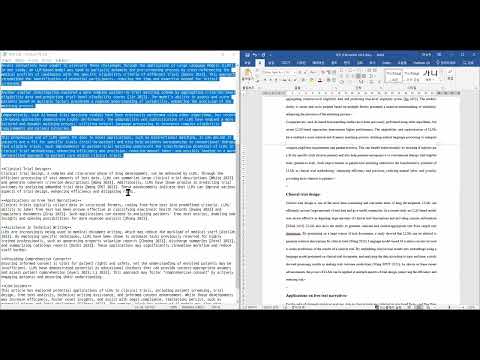
의료 AI 및 데이터과학 · Medical AI & Data Science
요약
이 영상은 임상시험과 임상 진료에서 대규모 언어 모델의 적용, 잠재력, 과제를 다루는 문헌고찰 논문의 초안 작성 과정을 보여준다. 핵심 workflow는 먼저 문법과 문체를 걱정하지 않고 생각, 참고문헌 메모, 번역된 아이디어를 완전한 문장으로 작성한 뒤, ChatGPT 또는 GPT-4를 이용해 반복적으로 수정하고 수작업으로 검토하는 방식이다.
핵심 내용
- Zero-draft는 저자의 생각과 참고문헌 관련 내용을 자유롭게 기록하고, 저자명과 출판연도 같은 인용 표지를 초안에 직접 삽입하는 방법으로 설명된다.
- 초기 초안을 Version 0.1로 저장한 뒤, 과학 학술지 투고에 적합한 문체와 형식으로 수정하도록 ChatGPT에 요청한다. 필요한 경우 특정 절의 확장, 일반 텍스트 출력, 문장 대안 제시, 누락된 핵심 용어와 인용 추가를 요청한다.
- 완성된 초안을 바탕으로 제목, 초록, 색인 키워드를 생성하는 과정도 시연된다. 이후 출력물을 인쇄해 빨간 펜으로 수정하면서 저자의 문체와 개념적 정확성을 다시 확인하고, 이 순환을 약 3-4회 반복한다는 내용이 제시된다. 개별 결과의 검증된 성능 수치나 비교 실험은 제시되지 않는다。 [Note: invalid character?]
- 권장 독자
- 생성형 인공지능과 대규모 언어 모델의 임상 적용, 의료정보학 연구, 학술 문헌고찰 작성에 관심 있는 연구자, 임상의, 대학원생 및 고급 학습자를 대상으로 한다.
- 범위와 한계
- 영상의 근거 노트에 따르면 논의된 임상 활용 예시는 비정형 임상 기록을 이용한 환자-임상시험 매칭, 시험 계획서와 코호트 정의 지원, 임상 서술의 자동 구조화와 질병 코드화, 임상 문서 작성, 동의 자료의 이해도 향상이다. 동시에 대규모 언어 모델의 불투명성, 환각과 편향, 임상 검증과 개인정보 보호 및 규제 승인 필요성이 한계로 제시된다. Chain-of-Thought와 같은 prompting 기법은 추론 구조를 보조할 수 있지만 이러한 위험을 완전히 해결하지는 못하며, 전문가 검토가 필요하다고 설명된다. 이 자료는 특정 모델의 임상적 유효성이나 실제 환자 결과를 평가한 연구가 아니라, 초안 작성 시연과 개념적 예시를 제공하는 영상이다.
- 연구 맥락
- 이 주제는 의료 인공지능, 임상 데이터 처리, 대규모 언어 모델의 안전한 활용, 그리고 AI 보조 학술 글쓰기라는 Sangzin Ahn 포트폴리오의 주제 영역과 연결된다.
Summary
The video demonstrates a workflow for drafting a review paper on the applications, potential, and challenges of large language models in clinical trials and clinical practice. The central workflow is to first write thoughts, reference notes, and translated ideas as complete sentences without focusing on grammar or style, then use ChatGPT or GPT-4 for iterative editing followed by manual review.
Key points
- Zero-drafting is described as freely recording the author's ideas and reference-related material while inserting citation markers such as author names and publication years directly into the draft.
- After saving the initial draft as Version 0.1, the presenter asks ChatGPT to revise its tone and formatting for scientific-journal submission. Additional prompts are used to expand specific sections, provide plain text, generate alternative sentences, and add missing key terms or citations.
- The workflow also includes generating title suggestions, an abstract, and indexing keywords from the finalized draft. The output is then printed and marked with a red pen to restore the author's writing voice and check conceptual accuracy; this cycle is reportedly repeated approximately 3-4 times. No verified performance metrics or comparative experiments are presented. [Note: invalid character?]
- Audience
- The intended audience includes researchers, clinicians, graduate students, and advanced learners interested in generative AI and large language models in clinical applications, medical informatics research, and academic review-paper writing.
- Scope and limitations
- According to the evidence notes, the clinical examples include patient-trial matching from unstructured clinical records, support for protocol generation and cohort definition, automated structuring and coding of clinical narratives, routine clinical documentation, and improved comprehension of consent materials. The video also identifies opacity, hallucinated or biased content, and the need for clinical validation, privacy compliance, and regulatory approval as limitations. Prompting methods such as Chain-of-Thought may support reasoning structure but do not fully resolve these risks, so expert review is described as necessary. The source is a workflow demonstration with conceptual examples, not a study evaluating clinical effectiveness or patient outcomes for a specific model.
- Research context
- The topic has a neutral thematic connection to Sangzin Ahn's portfolio through medical artificial intelligence, clinical data processing, responsible use of large language models, and AI-assisted academic writing.